
The Indoor Air Quality Handbook
Use source control, ventilation, filtration, and humidity checks to make practical indoor air quality decisions for an Ontario home, and learn when a concern calls for a qualified technician instead of another gadget.
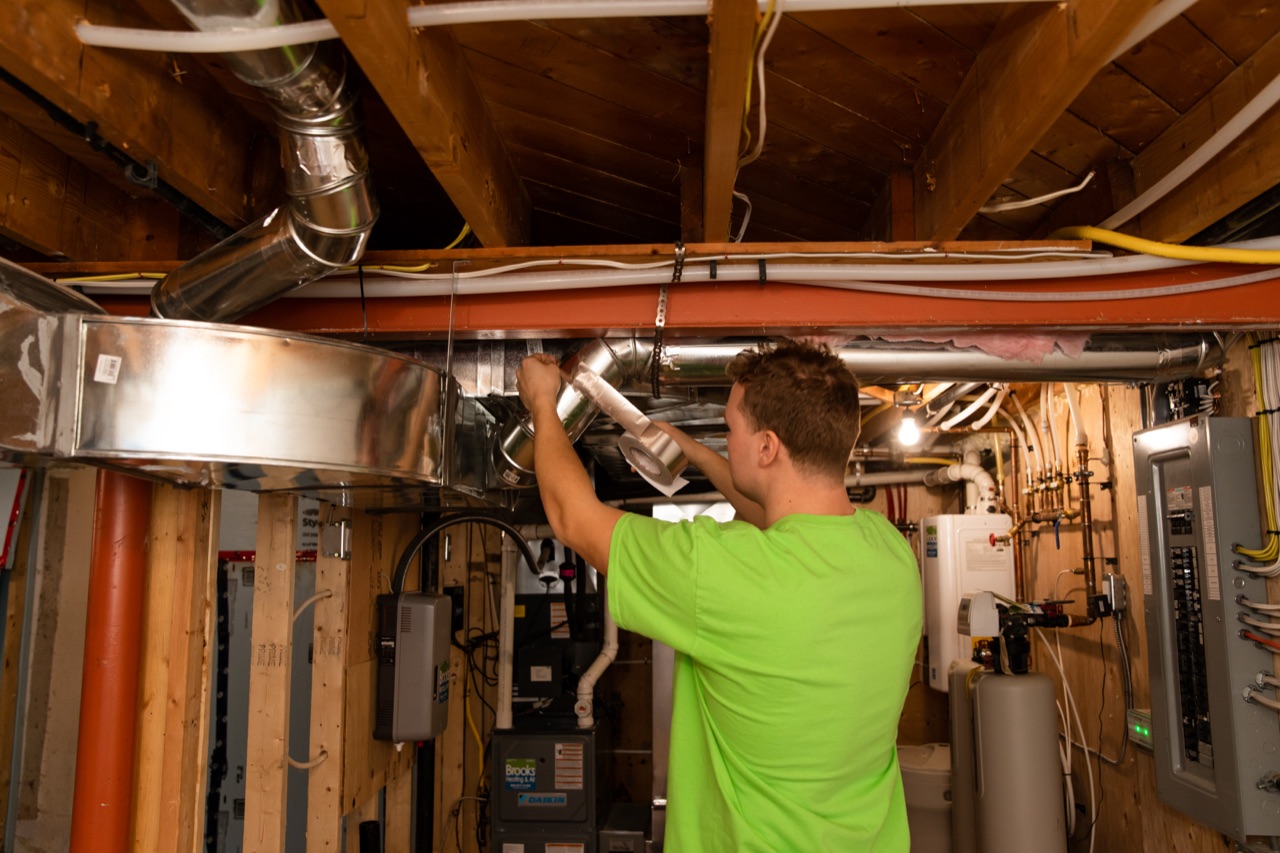
Better indoor air starts with the source of a problem, not a device catalogue. Name what you have noticed, where it happens, and when it changes. Then use five separate tools: source control, ventilation, filtration, humidity control, and, only where there is a clear need, an air-cleaning technology. A filter cannot repair a leak. A humidifier cannot correct poor ventilation. An air cleaner cannot remove every particle and gas. Homeowners can handle observation, routine cleaning, and manual-approved filter care. Equipment changes, combustion concerns, wiring, and duct modifications need qualified help from Brooks’ indoor air quality team.
Key takeaways
- Remove or reduce a pollutant source before trying to capture it later.
- Use ventilation to replace indoor air when outdoor conditions are suitable.
- Choose filters by particle performance, fit, and system airflow, not rating alone.
- Measure humidity and correct water sources before adding moisture-control equipment.
- Ask what a purification product targets, how performance is tested, and what it may release.
Start with a specific concern
“Improve the air” is too broad to guide a useful decision. A better description might be cooking odour that lingers, dust that appears after renovations, condensation on bedroom windows, a damp basement smell, or smoke entering during an outdoor event. Each pattern points to a different first step, and Brooks’ learning center has more homeowner guides organized by concern.
Keep a short log for one or two weeks. Note the room, time, weather, indoor relative humidity, activities, open windows, exhaust-fan use, and HVAC mode. A log can reveal patterns, but it cannot rule out hazards that have no smell or visible sign.
General consumer air-quality monitors can show trends, but a single number does not identify every pollutant or its source. Health Canada notes that many mould and chemical tests are difficult to interpret and do not always show how to fix the concern. Use measurements to sharpen a question, not to make a medical diagnosis or declare a room safe.
Invisible hazards need purpose-built checks
Radon needs a long-term test
Radon cannot be seen, smelled, or tasted. Health Canada’s Guide for radon measurements in homes says every home should be tested, regardless of its location or building type. It recommends a long-term test of 3 to 12 months, with at least 91 days during the heating season. Use a C-NRPP-approved device or a C-NRPP-certified measurement professional. A general indoor-air monitor cannot tell you the home’s radon level unless it is an approved radon measurement device used under that guidance.
Carbon monoxide alarms follow Ontario triggers
Ontario’s current carbon monoxide safety guidance requires alarms in a house that has a fuel-burning appliance, fireplace, or attached garage, or that is heated by air from a fuel-burning appliance outside the home. In an applicable house, alarms belong adjacent to each sleeping area and on every storey.
For an apartment or condo unit, the requirement applies if the unit has a fuel-burning appliance or fireplace, is directly above, below, or beside a service room or garage, or receives heated air from a fuel-burning appliance outside the unit. In an affected unit, alarms belong adjacent to each sleeping area and on every storey. Public corridors heated by air from a fuel-burning appliance have a separate building requirement.
Choose a CO alarm that meets Canadian performance standards, as shown by a recognized testing-agency logo, and install it according to the manufacturer’s instructions. A general IAQ monitor does not replace a compliant CO alarm.
Use the five-part indoor air framework
The five parts work together, but they do different jobs. Start at the top and add equipment only when the earlier steps do not address the defined problem.
1. Source control
Source control means reducing a contaminant or moisture problem where it begins. It is usually the first and most direct step.
Practical examples include:
- keeping the door between an attached garage and the home closed and well sealed
- never idling engines or running outdoor fuel-burning equipment in a garage
- using the range hood over cooking, especially when frying or boiling
- storing fuels and strong chemicals outside the living space as their labels direct
- selecting lower-emission materials where practical during renovations
- venting clothes dryers outdoors and keeping the lint path clear
- repairing plumbing, roof, foundation, or drainage leaks
- removing damp materials that cannot be cleaned and dried safely
Health Canada identifies source reduction as the most effective starting point for indoor air. No filter can undo a water leak inside a wall or stop contaminants from an idling engine in an attached garage.
2. Ventilation
Ventilation removes indoor air and brings in outdoor air. Kitchen and bathroom exhaust fans provide local ventilation. A heat recovery ventilator or energy recovery ventilator can provide planned whole-home ventilation. Open windows provide natural ventilation when weather and outdoor air conditions allow.
Ventilation is not the same as moving air with a ceiling fan or recirculating it through a furnace filter. It also needs balance. Strong exhaust without enough replacement air may affect pressure in the home. That matters around fuel-burning appliances.
Follow the operating and maintenance instructions for any HRV or ERV. Filters, outdoor hoods, drains, cores, and airflow balance all affect performance. Natural Resources Canada advises regular cleaning and annual service for these units. Installation, balancing, duct changes, and commissioning belong with trained professionals.
During smoke, smog, or another outdoor air-quality event, opening windows may bring the outdoor problem inside. Follow current public guidance for the event and use the home’s suitable cooling, ventilation, and filtration controls as directed.
3. Filtration
A forced-air filter captures some particles carried through the return air. It also protects HVAC equipment. It does not capture material that never reaches the return, and most common particle filters do not remove gases.
Three details matter:
- Efficiency: A higher MERV value generally means stronger particle capture in the tested range.
- Fit: Air that passes around a loose filter is not filtered.
- Airflow: A filter that adds too much resistance can reduce system airflow.
The best filter is not automatically the one with the highest number. Public health guidance says to use the highest-efficiency filter the system can handle without impeding airflow. Check the equipment manual or ask a qualified technician before moving to a more restrictive filter. Use the exact dimensions required by the rack and install it in the marked direction. For a deeper walk-through of MERV ratings and sizing this decision for your own home, see Brooks’ home air filter MERV guide.
Change or clean the filter based on its instructions and actual loading. Renovation dust, pets, smoke, runtime, and filter area can change the interval. Do not use a universal calendar as a substitute for inspection.
A portable HEPA air cleaner can supplement a plan for a defined room and particle concern. For practical sizing, multiply the room’s length by its width in feet. Health Canada says the minimum tobacco smoke CADR should be at least two-thirds of that room area. A 10-by-12-foot room has 120 square feet, so the general minimum smoke CADR is 80. Ratings assume an eight-foot ceiling. For a higher ceiling, choose a cleaner rated for a larger room rather than inventing a universal adjustment formula. Follow the product’s placement, filter, and operating instructions.
For a central accessory rather than a portable unit, compare the system requirements with Brooks’ air-cleaner information.
4. Humidity control
Relative humidity changes with temperature. Measure it with a dependable hygrometer in more than one area. Keep the sensor away from a supply register, direct sun, a shower, or a cooking surface.
Health Canada generally recommends indoor relative humidity between 30 and 50 per cent. Local conditions still matter. During cold Ontario weather, condensation on windows or other cold surfaces may mean the indoor level is too high for the home, even if the reading is within that broad range.
When humidity is high, look for leaks, wet foundations, poor drainage, an unvented dryer, and weak kitchen or bathroom exhaust. Air conditioning or dehumidification may help with remaining moisture, but neither should hide an active water source.
When the home is dry, confirm the measurement before adding moisture. A whole-home humidifier needs correct sizing, controls, drainage or water supply, and regular cleaning. Too much added moisture can collect on cold surfaces. If whole-home equipment is being considered, compare Brooks’ humidifier information with the system manual. Do not add a humidifier only because it is winter.
5. Air cleaning and purification
“Purification” can describe very different products. Ask the seller to name the target: particles, a particular gas, or material on an equipment surface. Then ask for the independent test method, airflow conditions, maintenance needs, replacement parts, and possible by-products.
Health Canada says air cleaning is rarely effective on its own and should be paired with source control and ventilation. It also advises against ozone generators in homes. Some electronic cleaners may produce ozone, so product emissions and certification need careful review.
Ultraviolet devices are not a general substitute for cleaning, filtration, ventilation, or moisture repair. Their performance depends on the target, exposure, placement, airflow, lamp condition, and safe installation. Health Canada says UV devices represented for reducing human pathogens must be registered or otherwise authorized under federal rules. Do not look at an operating UV source or install one in a duct without appropriate professional guidance. Avoid any product that promises complete protection or guaranteed outcomes.
Separate safe upkeep from system work
Most homeowners can:
- keep exhaust grilles and accessible outdoor hoods clear
- use kitchen and bathroom fans during pollutant- or moisture-producing activities
- inspect and replace a user-serviceable filter according to the manual
- track humidity and visible condensation
- clean small surface areas only within current public guidance and their ability
- keep combustion-air openings and room vents unobstructed
- test certified smoke and carbon monoxide alarms as their makers direct
Qualified help is appropriate for:
- wiring, motors, UV devices, or electronic air cleaners
- duct cutting, sealing in inaccessible areas, balancing, or airflow measurement
- HRV or ERV installation and commissioning
- recurring moisture, hidden water entry, or extensive visible mould
- fuel-burning appliance, vent, flue, or combustion work
- a filtration change that may exceed the system’s airflow capacity
For fuel-fired equipment in Ontario, use a TSSA-registered fuels contractor that employs certified technicians. Never use an air-quality product to cover a suspected combustion problem. Follow a carbon monoxide alarm’s emergency instructions immediately.
If you are unsure which category your situation falls into, Brooks’ free second opinion service can help you decide before you commit to equipment or repairs.
Georgetown and Halton Hills context
Ontario homes shift between closed-window winter operation and warm, humid summer weather. Brooks Heating & Air serves homeowners throughout Halton Hills and Georgetown, where spring pollen, renovation dust, damp basements, attached garages, and outdoor smoke events can create different concerns at different times. Older homes and additions may have uneven ventilation or return-air paths.
The answer is not to seal every opening and stop. Natural Resources Canada warns that air tightening can raise humidity and reduce air available to combustion appliances. Air sealing, ventilation, moisture, and combustion-air planning need to be considered together. For a broader look at balancing comfort, humidity, and efficiency across the seasons, see Brooks’ Healthy Home Comfort Guide.
A practical decision checklist
Before buying equipment, answer these questions:
- What exactly have we noticed?
- In which room and during which activity or weather?
- Is there a visible source, leak, or exhaust problem?
- Does the concern call for source control or ventilation first?
- Are temperature and humidity measurements reliable and repeatable?
- Which particles or gases is a proposed filter or cleaner tested to address?
- Can the HVAC system handle the filter without losing required airflow?
- What cleaning, replacement, and operating work will the device need?
- Could the product produce ozone or another unwanted by-product?
- Which part requires an HVAC, building-envelope, fuels, electrical, or remediation professional?
This order keeps a clear problem at the centre of the decision.
Frequently asked questions
Do I need an indoor air quality monitor?
Not always. A thermometer and hygrometer can reveal useful temperature and moisture patterns. Some monitors can track selected particles or gases, but no consumer unit measures everything. Decide what question the monitor must answer and check its limits before relying on its display.
Is a higher-MERV filter always better?
No. Higher particle efficiency can be useful only when the filter fits and the system can move its required airflow through it. Too much resistance can reduce performance or cause bypass. Confirm the equipment limit before changing filter type.
Will an air purifier remove cooking smells and gases?
Many common portable cleaners are designed mainly for particles. Health Canada notes that most air cleaners do not remove gases. Use an outdoor-vented range hood and reduce the source first. A product making gas-removal claims should identify the media, test method, capacity, and replacement schedule.
Should I add a humidifier every Ontario winter?
No. Measure first. Some homes become too dry, while others already show condensation or hidden moisture risk. If added humidity is appropriate, controls and maintenance matter. Reduce the setting if moisture collects on cold surfaces and investigate the cause.
Can indoor air equipment solve a mould problem?
It cannot repair the water source. Correct leaks, drainage, condensation, and ventilation issues first. Follow current public guidance for cleanup and get suitable professional help when the affected area is extensive, hidden, recurring, or beyond safe household work.
Choose the route that matches the finding
If source control and ventilation are already addressed and the remaining issue points to filtration or humidity equipment, use Brooks’ indoor air quality overview to choose the relevant equipment page. Radon testing, carbon monoxide compliance, water entry, and remediation follow their own official or specialist routes.
Whatever indoor air equipment you choose, it only performs well with regular upkeep — see The Brooks Maintenance Plan Guide to understand how ongoing care is evaluated.