
The Brooks Home Comfort Blueprint
Use a clear seven-part framework — listen, diagnose, explain, compare, plan, verify, and support — to make sense of your next Ontario home comfort decision. See where a free second opinion, financing, or a maintenance plan can help along the way.
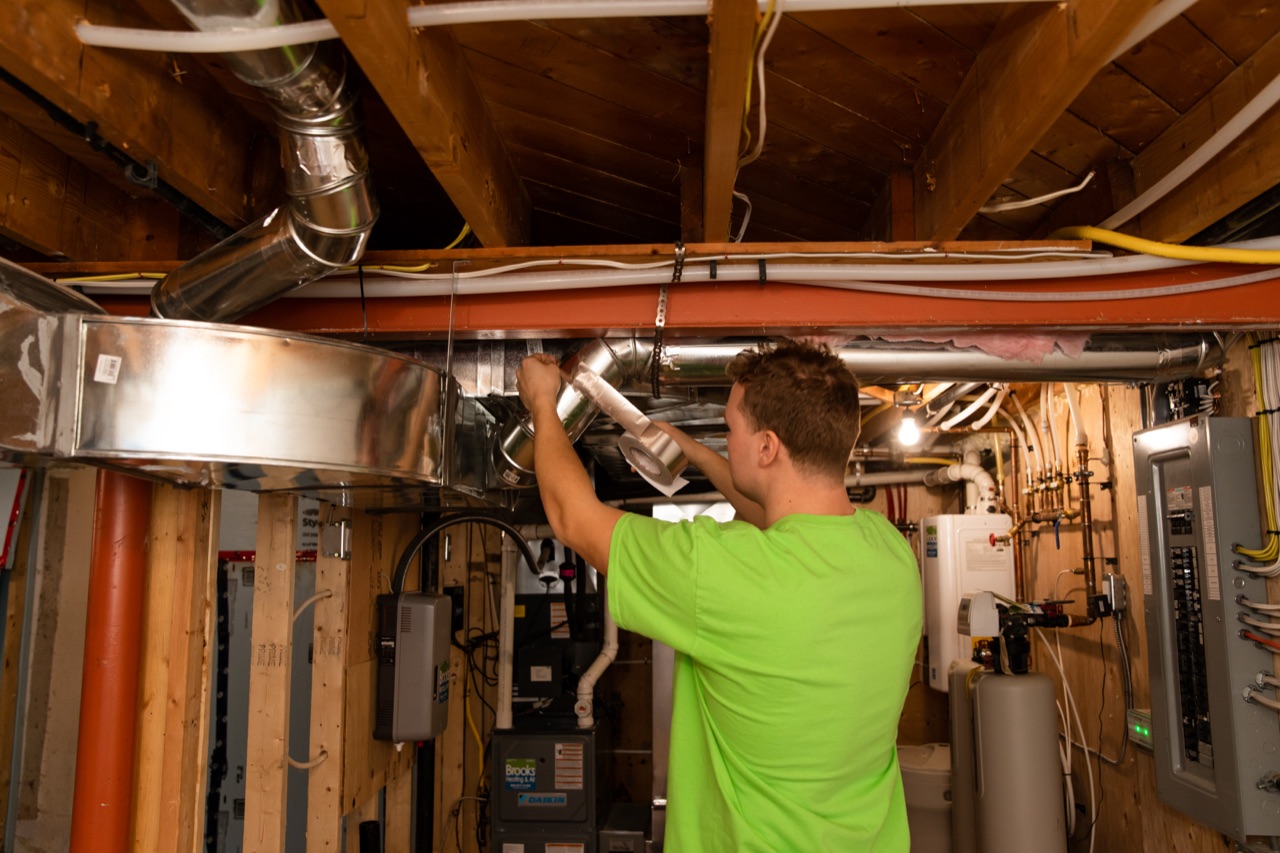
The Brooks Home Comfort Blueprint is an educational framework for a homeowner’s comfort decision. Its seven parts are listen, diagnose, explain, compare, plan, verify, and support. It turns “the house is uncomfortable” into a clear problem, evidence, reasonable options, written work, and a record of what happened. It is not a guarantee, warranty, or claim that Brooks follows one fixed service sequence on every call. Each home, emergency, system, and project is different. The framework gives you useful questions and next actions. Qualified people, written contracts, current rules, and equipment instructions still govern the work.
Key takeaways
- Start with the household’s lived problem, not a product.
- Require evidence and an explanation before comparing options.
- Keep repair, improvement, monitoring, and replacement open when safe.
- Put authority duties, work, cost, and acceptance evidence in the plan.
- Store final records so future support begins with facts.
First, use the safety gate
The blueprint begins only after immediate danger is handled. If a carbon monoxide alarm gives an emergency signal, everyone should leave at once. Call 911 or local emergency services from outside. For suspected natural-gas or propane leakage, evacuate without touching switches, controls, appliances, flames, garage-door openers, or phones inside. Call 911 and the fuel provider from safety.
Fire, smoke, sparking, a downed power line, and water near equipment that may be energized also bypass a normal comfort discussion. Stay away and follow emergency-service or utility direction. Do not wait for a second opinion, try another reset, or remain in the home to complete this framework.
When the condition is stable and there is no active hazard, begin at Listen. If safety changes at any point, return to the safety gate.
1. Listen: name the result the household needs
Listening means capturing the problem before narrowing it to equipment. “The furnace is bad” is a conclusion. “The back bedroom stays cooler on windy winter nights, and the change began after the renovation” is a useful starting point.
Record:
- affected room or area.
- season, weather, and time.
- what occupants feel, hear, see, or smell.
- controls and equipment operating at the time.
- when the pattern began and what changed.
- accessibility, sleep, noise, or household limits that matter.
Separate personal symptoms from the building problem. A health professional handles symptoms and treatment. HVAC, building, electrical, fuel, or other qualified people address the systems within their work.
Homeowner action: Write one sentence that names the place, condition, timing, and desired result.
2. Diagnose: gather evidence without leaping to a sale
A diagnosis should connect the concern to observations, tests, and limits. The right evidence depends on the system. It may involve fault history, temperatures, airflow, pressure, electrical values, combustion, refrigerant, hydronic flow, controls, venting, moisture sources, or building conditions.
Homeowners can share safe observations and records. Technical measurements belong to people qualified to take them. For regulated fuel tasks in Ontario, confirm both the business’s TSSA registration and the worker’s matching certificate. Electrical contracting belongs with an ECRA/ESA Licensed Electrical Contractor unless a specific legal exemption covers the exact task.
An incomplete diagnosis should stay incomplete. Record any blocked access or fault that did not occur during the visit. Do the same when a panel could not be opened safely or another trade must test first. Do not turn “not confirmed” into “passed” or “failed.”
If you want the findings reviewed independently before committing to a direction, ask about a free second opinion on the diagnosis.
Homeowner action: Ask for the finding, evidence, test limit, and any next test in writing.
3. Explain: connect the evidence to the effect
An explanation should make the reasoning visible without burying it in trade language. Use four links:
- Finding: What was observed or measured?
- Cause: What condition could produce that finding?
- Effect: How does it relate to comfort, safety, operation, or damage?
- Confidence: What is confirmed, likely, possible, or still unknown?
For example, a room temperature difference does not prove that the main equipment is too small. The cause might involve load, a closed path, duct or hydronic delivery, controls, sun, wind, or a changed room use. The explanation should show which evidence supports the proposed cause.
Ask what would disprove the conclusion. A clear answer makes room for new information and shows whether the next decision rests on a fact or an assumption.
Homeowner action: Repeat the explanation in plain words and ask the advisor to correct anything you misunderstood.
4. Compare: keep safe choices on the same page
Comparison is broader than repair versus replacement. Depending on the evidence, the choices may include:
- correct a control, airflow, distribution, drainage, or building issue.
- repair a failed component.
- monitor a stable condition with a defined trigger.
- improve one part while keeping sound equipment.
- replace equipment that is unsafe, unrepairable, unsuitable, or poor value to keep.
- stage work when the full project does not need to happen at once.
Each option should state what it solves and leaves unresolved. It should also show cost, disruption, expected use, warranty, upkeep, and the evidence that could change the choice. “Best” has no meaning without the household’s priorities and the home’s limits.
Repair should remain available when it is safe, workable, and sensible. Replacement should remain available when evidence and ownership goals support it. The framework does not award points for selling more equipment.
Homeowner action: Choose two or three decision factors that matter most, then compare every safe option against the same factors.
5. Plan: turn the chosen option into written work
A plan states who will do what, when, and under which authority. Include exact equipment, materials, labour, controls, and related trades. Add access, protection, removals, cleanup, exclusions, schedule, payment, warranties, and the method for approving a change.
Map Ontario requirements separately. A municipal building permit is not an ESA notification. An ESA notification is not a TSSA registration. The exact needs vary by project, building, fuel, electrical work, and municipality. Assign one person to confirm each possible requirement and name the final document expected.
Ontario’s renovation guidance limits the total for listed work when the written estimate is part of the contract. The total is generally capped at 10 per cent above the estimate. Going higher requires the homeowner’s signed approval for added work or a changed price. A new finding should become a clear choice, not a surprise on the final invoice.
When payment terms are part of the plan, review available financing options before signing so the schedule and the budget agree.
Homeowner action: Highlight every blank, allowance, exclusion, and authority duty before signing.
6. Verify: decide what “complete” will mean
Verification is not a promise that equipment will never fail. It checks the completed work against the agreed plan. Define acceptance before installation or repair starts.
The evidence will differ by job. It may include model and serial numbers, settings, normal control sequence, and measured airflow or temperature. Other jobs may need hydronic results, combustion or refrigerant records, drain checks, an ESA Certificate of Acceptance, a municipal record, or owner instruction. Not every job requires every item.
Use manufacturer instructions, the approved design, authority requirements, and contract to choose the checks. Only qualified people should perform internal or regulated tests. A homeowner can confirm that promised documents arrived and that the original concern was reviewed under the agreed conditions.
Homeowner action: Walk through the acceptance list and mark each item received, demonstrated, deferred, or not applicable.
7. Support: preserve the next useful fact
Support begins with a clean record. Store the signed contract, changes, final invoice, and proof of payment. Add the authority records that applied, equipment data, settings, measurements, manuals, warranty terms, any required registration confirmation, and unresolved items.
Write the next trigger instead of relying on memory. It might be a date from the manual or a return of the original fault. It could also be a reading outside an agreed range, a room that still misses the goal, or another trade’s follow-up.
Warranty and service duties come from their written terms. The word “support” in this framework does not create new coverage, response time, maintenance, or performance promises. It means the homeowner knows what record to keep, whom to contact, and what evidence to share next.
Ongoing check-ins are easier to keep on schedule with a home comfort maintenance plan that keeps records and reminders in one place.
Homeowner action: Save one complete project folder and one dated reminder tied to an actual instruction or open item.
Use the one-page blueprint
Complete one row at a time. If a row has no answer, do not hide it with a guess.
| Stage | Homeowner question | Output |
|---|---|---|
| Listen | What happens, where, when, and what result matters? | One-sentence comfort brief |
| Diagnose | What evidence supports the finding, and what is untested? | Finding and limits note |
| Explain | How does the evidence lead to the conclusion? | Plain-language cause chain |
| Compare | Which safe options meet the same priorities? | Side-by-side choice record |
| Plan | What work, terms, people, and authorities apply? | Signed scope and responsibility map |
| Verify | Which job-specific results and records show completion? | Acceptance list |
| Support | What must be kept, watched, or followed up? | Project folder and next trigger |
Put a red safety box at the top: Leave for an emergency CO signal, a suspected fuel leak, flames, or smoke. Stay clear of electrical arcing and water beside live equipment. Call the proper emergency help from safety.
Make the Brooks promise useful
“Honest comfort. Trusted advice. HVAC done right.” should give a homeowner something concrete to expect from a decision. It should not pretend every visit is identical.
Honest comfort means the stated goal and tradeoffs are visible. Trusted advice means a recommendation can be traced to evidence, limits, and reasonable choices. HVAC done right means the written job, qualified work, required authority steps, and agreed verification line up.
Those are homeowner tests for clear advice. They do not replace a contract, create a warranty, or say that every Brooks interaction uses seven formal stages. The confident promise is that a comfort decision should make more sense after the conversation, not less. For more background on separating honest guidance from sales pressure, see our honest homeowner’s guide to HVAC.
Apply the framework in Ontario
Ontario homes can involve several sets of rules at once. These may include municipal permits, ESA electrical duties, and TSSA-regulated fuels work. Manufacturer instructions, warranties, and consumer contracts add more layers. Confirm each one with its source. Requirements may change with the fuel, equipment location, electrical scope, building type, or municipality.
Keep climate in the brief, not as a shortcut. Georgetown and Halton Hills households plan for both heating and cooling, but local weather does not select a system by itself. Loads, distribution, electrical and fuel limits, building conditions, and household goals still decide fit.
Frequently asked questions
Is the Blueprint a guaranteed Brooks service process?
No. It is an educational framework a homeowner can use. It does not state that Brooks performs seven formal steps on every call. It creates no guarantee, warranty, scope, or result. The situation and written agreement define the actual service.
Does the Blueprint favour replacement?
No. It keeps safe repair, correction, monitoring, staged improvement, and replacement available until evidence and homeowner priorities narrow the options. Replacement is appropriate only when it earns its place in that comparison.
Who should diagnose the HVAC problem?
Use a person qualified for the test and work involved. A homeowner contributes observations. Regulated fuel, electrical, refrigerant, combustion, and other technical work must stay with people whose credentials and legal scope fit the task.
How do I know which permits or notifications apply?
Ask the municipality, ESA, TSSA, utility, or other authority that owns the requirement for the exact project. Put confirmation and responsibility in writing. Do not assume one approval covers all other authorities.
What if the result is still uncertain after diagnosis?
Keep the limit visible. Ask what evidence is missing and whether the system can be used safely. Then ask which test is justified and what decision can wait. A non-emergency second opinion may be useful when it reviews the same facts independently.
Take the next step with Brooks
Complete the one-page blueprint and circle the first row that remains unclear, then start the conversation with our team. call 289-224-1293 to talk through what you found, or request a home comfort consultation and we will follow up to schedule a visit. If you would rather start with a single focused question, send it through Ask Brooks along with the safe observations or documents that led to it.